“Avoidance refers to the tendency to evade intimacy with other people, but also to defend against certain feelings, impulses, memories and needs that arise internally.”
(Cundy, 2019)
The agonising pain of a broken heart is well documented throughout art, literature and popular culture. Music, paintings, poetry, books and plays have been retelling familiar archetypal themes of lost love, unrequited love, and the painful, agonising suffering associated with such experiences since the dawn of time.
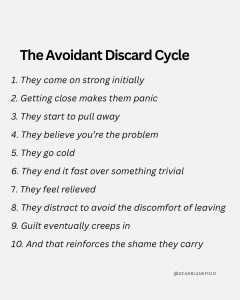
The avoidant discard is a term that can be found circulating the internet these days. It is not a clinical term, or a diagnosis, but clearly seems to resonate for many if the traction online is anything to go by. For anyone who has experienced a relationship with an unhealed dismissive avoidant and been subject to their unilateral decision to end the relationship in what can only be described as a cold, brutal, cruel and generally, abrupt way, the word ‘discard’ captures the experience perfectly.
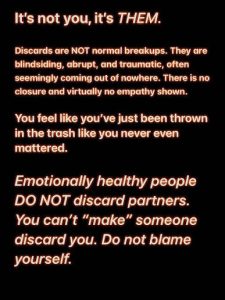
Feeling cruelly discarded by someone you loved and cared for, as if you meant absolutely nothing to them, is a unique and special way of being hurt. The cold, callous indifference. The anger, disdain and contempt that they communicate in their treatment of you, creates a wound that pierces at a soul level. It cracks you wide open. It burns and shatters you. Your nervous system literally goes into shock, as your brain frantically struggles to make sense out of what’s happened. This creates an intense frenetic energy inside, as the brain and the body engage in a fight to reconcile conflicting thoughts, feelings and sensations. Shock hits you first, followed closely by confusion, grief, shame and guilt. The grief hits you immediately, with an impact that is both overwhelming and terrifying in its power. Your body will have recognised what was happening much earlier on in the relationship, before your brain was even consciously aware of what was going on. Inconsistent relational signals are confusing and destabilising to the nervous system. Closeness followed by distance, warmth followed by coldness, intimacy followed by withdrawal. Your nervous system became addicted to the waiting. The intermittent reinforcement of the reward of reconnection creates an addictive cycle, where the waiting and the longing become the hook that keeps you locked into the harmful dynamic. The neurotransmitter dopamine is a reward neurochemical, but more specifically it is an ‘anticipatory’ chemical. The anticipation of the reward becomes more addictive than the reward itself. Dopamine floods the system each time the reward of reconnection is experienced, whilst feeding the anticipation of the next ‘hit’. In much the same way as slot machines, and internet algorithms are designed to fuel addiction, this relational dynamic becomes the drug, as our seek system becomes chronically activated in pursuit of the next attachment high, the next breadcrumb. The dopamine becomes the antidote to the stress hormone cortisol, released and flooding the system because of the longing and the waiting. Inconsistent care is much more addictive than consistent care. If something is consistently available, it loses value. Consistent care develops trust, whilst inconsistent care develops compulsion.
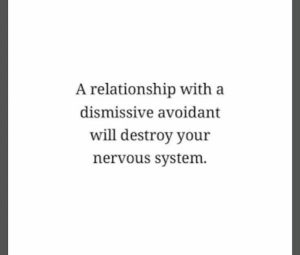
The dismissive avoidant attachment style is a complex constellation of autonomic signals, behavioural strategies, neural pathways and emotional and psychological defences that an internalised attachment system conditioned to fear vulnerability, intimacy and connection learns and utilises in the interests of survival. Avoidant individuals learnt as children that having emotional needs and expressing them was not safe. Their emotional needs were either dismissed entirely or met too inconsistently for sufficient internal security and safety to successfully develop. In some cases, this emotional neglect may have taken forms of being overtly neglectful and/or abusive parenting, such as being ridiculed, teased or punished for expressing emotion. However, overly intrusive parenting, such as parents oversharing, or being excessively emotional themselves and/or overbearing may also lead to children learning to hide parts of themselves due to equating closeness with loss of freedom and overwhelm. Consequently, intimacy and connection are perceived as threats to be avoided, because emotional closeness signals danger. Their nervous system adapted accordingly, becoming conditioned to shut down and repress emotional needs and expression.
For the avoidant person, hyper-independence and self-sufficiency become a primary survival strategy to prevent the fear of vulnerability. Not a choice, but a fear driven trauma response. For true independence is not the absence of need, but the capacity to need without fear (Fry, 2025). If they do not have to depend on others for any of their emotional needs, then they will never have to risk abandonment. Risk being seen. Risk being truly known. Because it is a deep core wound of shame. An ‘I am defective’ core belief that drives the avoidant threat system. Their conscious fear of intimacy, is driven by an unconscious fear of abandonment. Their maladaptive relational learning has resulted in the belief that needing others leads to pain, rejection, abandonment or loss of self. The fear of engulfment. The illusion of not needing anyone, and relying only on themselves, keeps the terrifying threat of rejection, abandonment and engulfment at bay.
Avoidant individuals often have a calm, composed, even detached persona. They are extremely effective in dealing with external crises, have strong problem-solving skills and appear to be able to remain calm and cope well under pressure. However, underneath this tightly controlled performance there is a low-level, chronic anxiety constantly wiring beneath the surface. A threat system in a constant state of hyperarousal scanning the physical and relational environment for perceived threats. What looks like “calm”, is often freeze or flight mode.
Repressing emotions takes significant and active subconscious work that keeps the nervous system operating in a chronic low-level fight/flight mode to maintain it. This takes a substantial toll on the physical, psychological and emotional well-being of dismissive avoidant people, draining physical and mental energy over time. This may often result in avoidants frequently experiencing extreme physical and emotional tiredness and/or burnout. Needing a lot of rest and sleep to maintain optimal daily functioning. Long-term impacts on physical health and well-being are also implicated. Current research evidence suggests that attachment avoidance is associated with dysregulated physiological responses to stress, increased susceptibility to physical illness and/or conditions, and poorer disease outcomes (Pietromonaco & Beck, 2019)
There is also evidence to suggest a strong correlation between avoidant attachment and addictive and compulsive behaviours (Estevez et al 2022). The avoidants externalised locus of control results in focusing on external factors as a means of maintaining an internal illusion of control and safety. Their fear driven need for independence and autonomy results in the use of distance and withdrawal to regulate rather than co-regulation with others, or turning inward. Additionally, the development and use of externalised compulsive behaviours such as excessive spending, sex, food, gambling etc, represent further potential means of regulating their internal sense of dysregulation and soothing their internal anxiety, to assist in maintaining a perceived sense of safety and control.
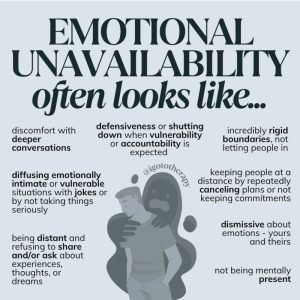
Open communication, reciprocity, emotional availability, intimacy, both physical and emotional, conflict resolution, vulnerability, accountability and consistency. All of these represent necessary characteristics and qualities for healthy, secure and sustainable relationships. However, every one of them also represents a potentially triggering threat for the unhealed dismissive avoidant. Their nervous systems are conditioned to avoid vulnerability in the form of emotional exposure so much, that they struggle to feel, process and communicate their own emotions, and therefore fear others expression of theirs. Without the capacity to fully feel and process our own emotions, our capabilities for deep, meaningful self-reflection are severely impeded. This consequently limits the development and access to functions crucial for attachment bonding to develop, such as empathy, compassion, attunement and emotional intelligence. In relationships the avoidant operates from a default position of self-preservation. Without doing the internal work and healing their own attachment wounds, they will always prioritise safety over vulnerability, comfort over consciousness and denial over development. This poses significant problems for trust, deep bonding and reciprocity to develop in relationships. Meaning that the relationship will remain static in a limbo state of superficial connection, with an inability to progress to a deeper, more meaningful depth.
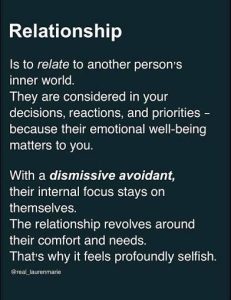
““Dismissives let you know that you are low on their priority list, and your inner emotional state is your problem—when you are with one, you are really still alone, in an attachment sense.”
Avoidant: How to Love (or Leave) a Dismissive Partner
The avoidants’ entire psychological structure is built around the premise that withdrawal is always the safer choice. They interpret emotional expectation not as bids for connection and intimacy, but as opportunities to either fail or be controlled. Due to their maladaptive defences and fear of open, direct communication, their instinct is to run and withdraw. There is no avoidance without anxiety, and vice versa. They are synonymous. However, avoidance merely becomes a maintenance factor of the problem. Without doing the inner work. Meaningful self-reflection, accountability and attachment informed psychotherapy to identify and heal their own attachment wounds, the destructive relational patterns will continue to repeat.
Many avoidant individuals will leap straight into another relationship without processing the loss or ending of the last one. For most of us grief and loss are front loaded. The impact of the loss of a loved one, whether it be through death, or the ending of a relationship will hit us immediately like a freight train. However, for the avoidant, grief and loss are back loaded. On a delayed timeline, due to the emotional repression of the avoidants internal defense system. For many dismissive avoidant individuals, the process of serial dating and short-term relationships is a familiar, repetitive cycle. The initial stages of new relationships accompanied by releases of dopamine, the pleasure and reward neurochemical, provides excitement, and a welcome distraction from the ending of the previous relationship; any potential feelings of grief, guilt or shame, along with the potential for any accountability, learning, development and growth. The discomfort of such feelings triggers their defence system to run, and running towards a new relationship and/or partner represent a viable and attractive option.

Biochemically speaking, individuals with avoidant attachment show significantly lower baseline levels of oxytocin, the bonding hormone, and the hormone vasopressin, which plays a significant role in collaboration, loyalty and commitment. This results in an overuse of dopamine as the primary neurochemical for both stress management and pleasure (Smith, 2026). What this means in relational terms, is that without having bonded via oxytocin and vasopressin, and with the overemphasis on dopamine; that excitement and novelty represent the most sought-after elements of relationships for the dismissive avoidant. Without sufficient bonding having taken place, they can feel little to no attachment and/or loyalty or commitment to partners and may often feel rising irritation as the perceived costs of the relationship begin to outweigh the rewards. These biochemical factors provide further explanaition as to how avoidant individuals can discard partners with such apparent coldness, ease and brutal efficiency. It is not merely a case of being able to detach quickly, but simply a case of their never having ‘attached’ in the first place. In new relationships, they may become excited and exhilerated at the thrill of feeling desired, the chemistry of the shared fantasy, that ‘this is the one’. Many avoidants will engage in love bombing behaviours during these early honeymoon stages of the relationship, as they experience the dopamine high. Most importantly for them, it will feel easy at this stage, as there is no commitment, no expectations and therefore no perceived threats. It is too early on for the new person to have triggered their attachment wounds, meaning that the attachment system remains dormant. However, once the relationship reaches a point that requires a deepening level of intimacy and connection to develop and grow, and starts feeling ‘real’, their attachment system activates, resulting in nervous system deactivation, distance and withdrawal. This leads to eventual discard, rinse and repeat.
There can be no real, meaningful connection or closeness without vulnerability. The risk of vulnerability can feel frightening, but this signals to us that the connection we’re striving for, along with the person that is with matters, and has value. Shared vulnerability facilitates and promotes emotional closeness, which is the bedrock of true intimacy. Repressing, avoiding and ultimately running from discomfort can certainly reduce the potential for pain, but it will also prevent the development of relational depth. It will inevitably prevent the relationship from becoming ‘real’. Relationships can only remain at a superficial level if we continue to choose safety over discomfort. The relationship will remain in a perpetual limbo state, unable to progress, evolve or grow.
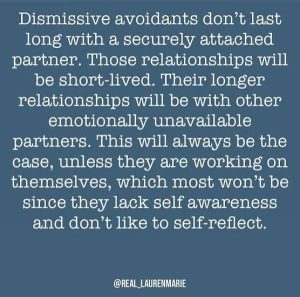
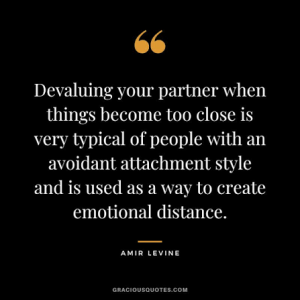
Avoidant deactivation strategies are driven by the need to suppress and avoid emotional pain and discomfort activated by relational bids for intimacy or support by others (Shaver & Mukilincer, 2007). Initially developed during childhood as a means of downplaying their emotional reactions to primary attachment figures emotional unavailability, inconsistency and lack of effective co-regulation. Deactivation strategies encompass a range of predominantly unconscious protective behaviours and defence mechanisms deployed as a means of mitigating emotional closeness and maintaining emotional distance. When in deactivation mode, the avoidant may inhibit or mask any verbal and non-verbal expressions of emotion (Gross, 2011). When intimacy or vulnerability become too threatening, they assist in regaining a perceived sense of autonomy, control and safety. Common examples of deactivation strategies include emotional withdrawal to create distance, minimization, projection and devaluation in the form of focusing on and magnifying perceived flaws in their partner. When they feel trapped, or overwhelmed, they may weaponize those flaws and unleash them in the form of aimed cruelty at the partner. Their own shame and guilt at potentially not feeling able to meet the expectations of the other, culminating in the internal pressure of feeling trapped and overwhelmed. Owning such feelings would force them to confront their own core shame wounds of I am not good enough, and so they may often project them onto the partner, as a means of deflection.
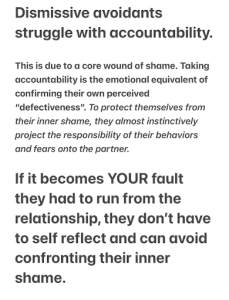
Partners experiences of deactivation in addition to noticeable emotional and physical distance and withdrawal may also include. Text messages becoming less frequent, and the warmth of previous exchanges being replaced by a colder more formal, minimal tone. A glazed look that appears in their eyes whenever the partner shares their own vulnerability or invites the avoidant to either discuss or share their own feelings. Too much perceived closeness, deep conversations, talks about the relationship or making future plans, are all potential triggers for the avoidants unconscious defence system to deactivate, due to discomfort, and their autonomy and independence feeling threatened. When in deactivation mode, the frontal lobes are either compromised or depending on the level of perceived threat, go completely offline. This means that empathy and compassion are either limited or inaccessible, which explains the potential coldness, cruelty and even passive aggression that may be exhibited by an avoidant when in deactivation mode.
Psychological projection is a defence mechanism and an effective form of emotional avoidance. This makes it a formidable tool of the avoidant internal defence system, that will be utilised reliably at the merest hint of emotional overwhelm. It is much easier for the avoidant to see other people’s flaws and shortcomings than it is to see their own. Without internal work, their capacity for self-reflection remains low, which makes personal accountability unlikely. When in deactivation mode, it is important to note, that the avoidant persons fight flight threat system is activated. Although flight is generally the avoidant threat systems preferred pathway of choice, when feeling engulfed and trapped, fight will take over as a secondary option. Projecting their own shame and guilt externally outwards onto the partner in the form of anger, cruelty, blaming and shaming prevents them from having to engage with their own internally. In the modern world with mobile phones being the preferred media of communication for many, text message provides an additional layer of avoidance in that it is a form of communication that can be used at a distance. It is extremely common for many people’s experience of being discarded for this to have been via text message, or social media. If the avoidant were to have a face-to-face conversation, and witness first-hand the hurt and pain they had caused someone who cares for them, they run the risk of seeing a version of themselves reflected back at them in those expressions, that they lack the capacity to tolerate. Their own comfort is more important than your pain, and they would rather disappear, vanish, than risk facing you and being accountable. So, distance and deactivation. Complete disengagement, deletion and lack of accountability represent the safest options.
These unconscious defences are activated by the nervous system as a type of instinctual ‘kill switch’ to nullify the threat of vulnerability, whilst justifying the need to run, yet still maintain a positive self-concept. If it’s the others’ fault, and responsibility for their behaviour is justified, they can maintain their belief that they are not the problem, are still a good person, and they do not have to take any accountability. So they rewrite the narrative. Change the story, where they are either the hero or the victim, and the other is the villain. If the partner was too needy. Too demanding. Too insecure or too controlling, then they cannot be to blame for their own emotional unavailability. Their own fear of confrontation, that leads to their avoidance of difficult and uncomfortable conversations. Their lack of capacity to show up in the relationship and to be emotionally available, consistent and accountable.
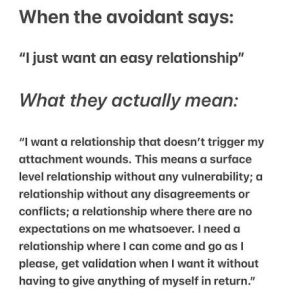
Paradoxically, many avoidant people crave being in a relationship to the extent of many severely struggling when they are not in one. One of the tragedies of the avoidant attachment style is that they can be in love with the idea of being in love while lacking the emotional maturity and capacity necessary to tolerate the reality of true intimacy, and the level of vulnerability it requires. They love, love, but lack the emotional capacity to be in something that requires long-term, stable effort. The affliction and price of avoidance is that they are merely running from and ultimately sabotaging themselves. Until we meet the wounded, disowned parts of ourselves that we fear, avoid and run from, we can never truly ‘meet’ anyone else on a meaningful level. The avoidant wants partners who ask for less, need less, feel less and expect nothing. Their fear results in seeking love without vulnerability, affection without depth and commitment without surrender. Not only both idealistic and unrealistic, but this also means that they will continue to run from and/or discard partners who invite personal growth and relational depth. Without doing the inner work, they will continue to choose ease over discomfort every single time. However, this difficulty in forming deep, lasting connections does come at considerable cost. They are living life at arms length. Where hyper-independence and self-sufficiency are celebrated outwardly, but self-isolation, fragmentation and loneliness are experienced internally (Fry, 2025).
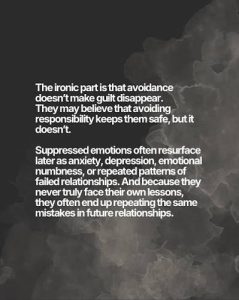
Emotional repression is not calm. Emotional numbness is not peace. It most certainly isn’t strength. It’s fear. Shame and guilt do not disappear when they are repressed. They stay in the depths of the unconscious where they grow in power, gathering interest. Only to become more destructive, as they’re unconsciously acted out within relationships with self and others. To paraphrase Carl Jung:
“Until we make the unconscious conscious, it will direct our lives, and we will call it fate”
It is important to note, that avoidants are not bad people. As is the case for many of us, they carry deep childhood wounds and are on their own personal healing journey. None of us are responsible for the hurt we experienced as children. But as mature adults we each have a responsibility to take accountability for those wounds, and the harm they may cause to other people. It’s either that or continue to allow them to hurt and shatter the hearts of those who try to love us. Understanding that for the most part it is fear not cruelty that drives these confusing and damaging behaviours, neither excuses nor minimises the impact on others. To continue to repeat the same destructive patterns in relationships as we age and mature, refusing to learn and taking no accountability demonstrates emotional and spiritual immaturity. It is dark, shadow, low-vibrational energy in action.

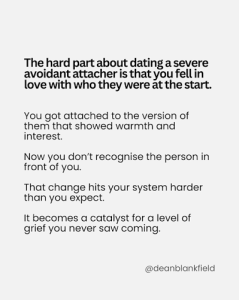
Whatever your own experience of being discarded, whether it was being ghosted, a slow fade, or an angry, reactive, blindsiding tirade, where you were blamed for everything that was wrong with the relationship, and for their running away. Whether it was a relationship that lasted for weeks, months or years. There is a truth to be recognised from this experience. It’s a painful truth, but an unavoidable one. It is also the truth that may hopefully set you free if you allow it to. In treating you the way they did. In how they discarded you, they showed you exactly who they are. Not the potential of who they could become if they were to do the inner work. Demonstrate the courage, the strength and integrity to recognise their own unhealed attachment wounds and actively seek out attachment informed psychotherapy to assist them in healing. But who they are right now. And now, no matter how much you try, you cannot ‘un-see’ that. You cannot un-know what you now know. Their betrayal has changed you forever, and it’s also changed your experience and perception of them in ways that are impossible to reconcile with who you thought they were. Who you fell in love with. Who you imagined co-creating a future with. Who’s hand you held in yours, who you hugged and laughed with, and shared intimate, precious moments with. Who maybe told you that they loved you. That you were soul mates, and shared a karmic connection. Now you know that all of that was meaningless to them. That you, and the relationship meant absolutely nothing to them. Because the reality is, that all of that was merely a tightly controlled performance. A mask they wear. Because in the end. The brutal, painful end. They gave you a glimpse behind the mask. They showed you who they really are without it.

So, you’re not only grieving the loss of the relationship. The loss of who you felt you were when you were with them. When they were in your life. The future you imagined and planned for with them. But you’re grieving for the loss of who you thought they were. The reality collides with the fantasy with brutal, heart shattering force. Being broken by someone you believed in causes pain and a sense of betrayal that is deep and cataclysmic.
The experience of being discarded in such a way, by someone you loved and cared for causes deep, painful wounds. The betrayal goes way beyond the initial shock of the experience, causing a profound betrayal of trust. Not only in the betrayer themselves, but in others, and perhaps most painfully in your own judgement and perception. Core beliefs about safety, stability. The trustworthiness of relationships, connection and faith in the human condition are shattered, leaving you with a sense of feeling untethered, lost and adrift (Thrift, 2025).
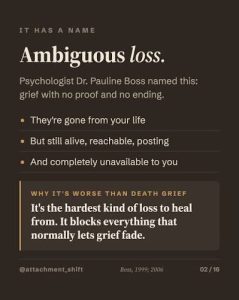
The lack of closure leaves you with an ambiguous form of grief. How do we grieve for someone who still lives. How do we rationalise the loss to ourselves when there was no goodbye. No conversation. No closure. The unilateral nature of the ending leaves you with nothing but doubts, unanswered questions and pain. You retroactively question everything about the relationship. The connection. Did it ever mean anything to them. did I ever mean anything to them. Such questions often create shame, and shame makes the wound more private. More personal. People are not disposable. To be used, discarded or thrown away like trash, and to treat people as such is emotional violence.

Feeling deeply. Loving deeply, are not character flaws, they are strengths. You entrusted the most precious and valuable thing you have, your heart, to someone who is too heavily defended and busy maintaining the internal fortress they’ve built around their own, to treat yours with the love, care and respect it deserves. They’ve broken it. Shattered it. The wound is real, and it hurts. It’s the type of pain that aches and burns inside, and triggers something deep within your soul. But the ache in your heart isn’t a sign of weakness. It’s a sign of strength. It’s a sign that you loved deeply, openly and honestly. Their treatment of you is not a reflection of your worth. It’s a reflection of their true character, and lack of emotional capacity. The way we treat others is a direct reflection of who we truly are inside. It reflects our true character. Our true nature. When we treat others disrespectfully, coldly, cruely. We are not operating from a place of integrity, but from our own abandonment wound. It is our shadow speaking. We are not operating from a place of love, empathy or compassion. We are operating from inside the abandonment wound itself. Not from a place of peace and honesty, but a darker place of fear and pain.
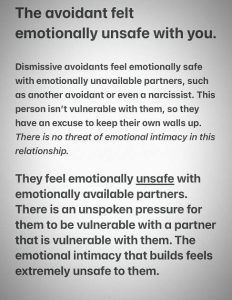
Your emotional availability was triggering for them. Dismissive avoidant individuals fear emotional expression and availability, which means that your readiness and willingness to be open, vulnerable and accountable was simply too much for their limited emotional bandwidth to handle. They can only care from a distance. Which means that without doing the inner work, and significant self-exploration, accountability and self-development, that they can only love from a distance.
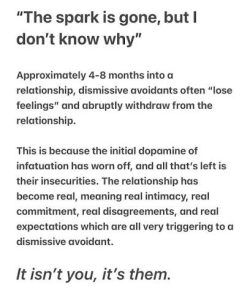
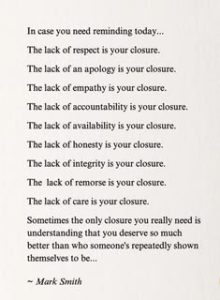
There is very little chance that you’re ever going to get the closure you seek from them. Neither the acknowledgment, nor the apology for treating you the way they did. For hurting you as much as they did. Your feelings were of little consequence to them when you were in a ‘relationship’ with them, and so they will matter even less to them now that you’re no longer in one. They will have moved on, with someone else. But they haven’t moved on with someone better than you. They will have entered a relationship with someone they perceive as ‘easier’ than you. Someone that doesn’t appear to ask anything of them. To expect anything of them. Surface level, superficial and light. With no deep emotions, no conflict and no expectations. A relationship that doesn’t trigger their attachment wounds. But relationships like that don’t exist in the real world. So once their attachment wounds are triggered, which they inevitably will be. They will repeat the same cycle. It’s how this stuff works. Without doing the inner work, we are destined to repeat the same cycles, the same patterns until we learn the lessons and do the work.
For people shaped by early emotional and relational trauma. People so heavily defended that they’re unable to access the self-awareness or the courage to truly look at themselves. Who have continued to act out the same defensive, harmful and destructive relational patterns for decades until they’ve become ossified and calcified. It’s not a choice, but a trauma response. The adage ‘hurt people, hurt people’, refers to how individuals with unresolved trauma and pain will often project their suffering onto others via harmful behaviour. It is an apt description of the avoidant discard cycle.
They were never going to be able to give you what you need in a relationship. They lack the emotional capacity, the depth and emotional maturity necessary to have a healthy. loving relationship. They’re too focused on their own needs, their own comfort and their own independence to truly open up enough. Be vulnerable and accountable enough, to develop true, meaningful intimacy with someone.
You deserve to be with someone who does not fear true intimacy and connection. Someone that has the capacity, the depth, the courage and the integrity to be with their own vulnerability and sit with their own discomfort for long enough to engage in healthy relational communication, development, maintenance and repair. To take accountability for their own flaws, their own wounds and learn from them. Grow from them. To learn and grow with you, together. While they, well they need to be with someone who doesn’t expect that of them. You represented emotional truth, connection and depth. And they’re all terrifying to someone who equates intimacy with danger. so they did the only thing they know. They ran. They ran towards the only things that they’re familiar with. Safety, distance, predictability and simplicity. Consciously they’re seeking a soul mate, but in reality what they’re unconsciously seeking is an escape from the intensity of their own emotions. It’s not about being ‘better’. It’s merely an incompatibility issue.
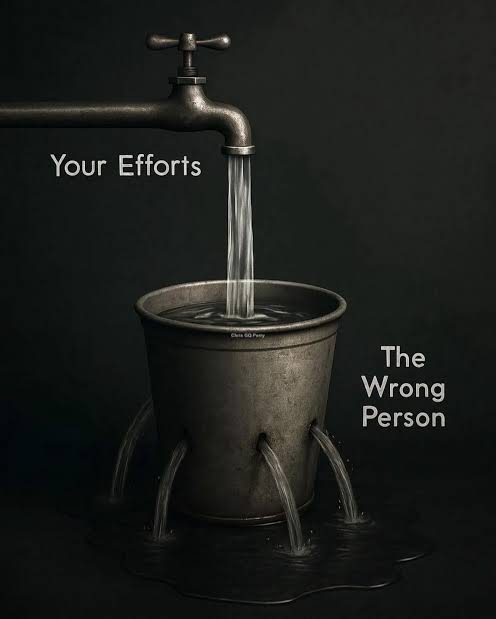
But perhaps something else to reflect on. Something to consider. Is what is it about you, within you. That felt so drawn to someone who was emotionally unavailable. To keep reaching out and trying to connect with someone who didn’t have the capacity to meet you. What you were seeking was not the problem. What you wanted and needed from them wasn’t unreasonable, or too much. You, were not too much. You were merely asking something from the wrong person. You were pouring emotional energy into an individual and relationship that was simply incapable of either holding it or returning it. The painful result of which, is a perpetual state of feeling unchosen, depleted and deprived of intimacy and connection. Giving away your energy, your power to someone who doesn’t deserve it is a draining and ultimately soul-destroying process, that will only ever end in pain and disappointment.

Letting go can be an extremely difficult process. For some, it is even a spiritual process, but it can also reset the nervous system. By continuing to feed the memories of your past person. The betrayal, the pain, the loss. By thinking about conversations that you never had, and that will never happen, you are feeding and maintaining your attachment to them. You are allowing someone to continue hurting you and live inside your head that doesn’t deserve to be there. Accept that the person in your mind no longer exists. You are not missing them as they truly are. You may miss the person you thought they were, or the person you hoped they would become. Our minds can be very good at only remembering the good times, whilst ignoring the painful truths. Accept what their actions and treatment of you have shown you. This acceptance does not mean that their behaviour was either fair or just. But it may assist you in no longer fighting the truth, being able to release the pain, and move forward.
Cundy, L. (2019). Masters in the Art of Defence: Shame and Defences Against Intimacy in Cundy, L. (ed), Attachment and The Defence Against Intimacy: Understanding and Working with Avoidant Attachment, Self-Hatred and Shame.pp: 69-105. Routledge, London.
Estevez, A., Marcia, L., Momene, J., & Extaburu, N. (2022), Attachment and Behavioural Addictions. Handbook of Substance Misuse and Addictions. pp: 1-21. doi: https://doi.org/10.1007/978-3-030-67928-6_7-
Fry, B. (2025), When independence is a Trauma Response: Avoidant Attachment in Relationships. Available at: https://benjaminfry.co.uk/post/when-independence-is-a-trauma-response-avoidant-attachment-in-relationships/ (Accessed: 14 Aug 2026)
Pietromonaco, P. R. & Beck, L. A, (2019), Adult Attachment and Physical Health. Current Opinion in Psychology, pp. 115-120 , doi: 10.1016/j.copsyc.2018.04.004
Shaver, P. R. & Mikulincer, M. (2007). Adult Attachment strategies and the Regulation of Emotion, in J.J. Goss (ed), Handbook of Emotional Regulation. Guilford, pp: 446 – 465
Smith, A. L. (2026), Avoidant Attachment in Women: Cracking the Code. Available at: https://adamlanesmith.com/avoidant-attachment-in-women-cracking-the-code/ (Accessed: 17th August 2016)
Thrift, O. (2025), Healing from Protracted Betrayal Trauma: When Betrayal Becomes a Pattern. Blog Post, 9th June. Available at: https://thepsychologycompany.co.uk/healing-from-protracted-betrayal-trauma-when-betrayal-becomes-a-pattern/ (Accessed 13 August 2026)